VARAHA RAJPUT
A Historical Repository of the Hunnic Migration to Hind
Tracing a forgotten Kshatriya line from the Altai steppe to the Shivalik foothills — through inscriptions, coins, chronicles, and DNA.
Start here
This site is a research repository, not a chronicle. The Journey carries the narrative in eight pillar chapters, from the Altai steppe to the Shivalik foothills. Lineage holds the genealogy, the vanshavali and the genetic evidence. Timeline lays the whole span out by date.
Behind those chapters sit the individual studies — rulers, clans, inscriptions and themes, each argued from inscriptions, coins, chronicles and revenue records. They are all gathered under Articles, newest first.
★ Latest Articles
New work is added here first.
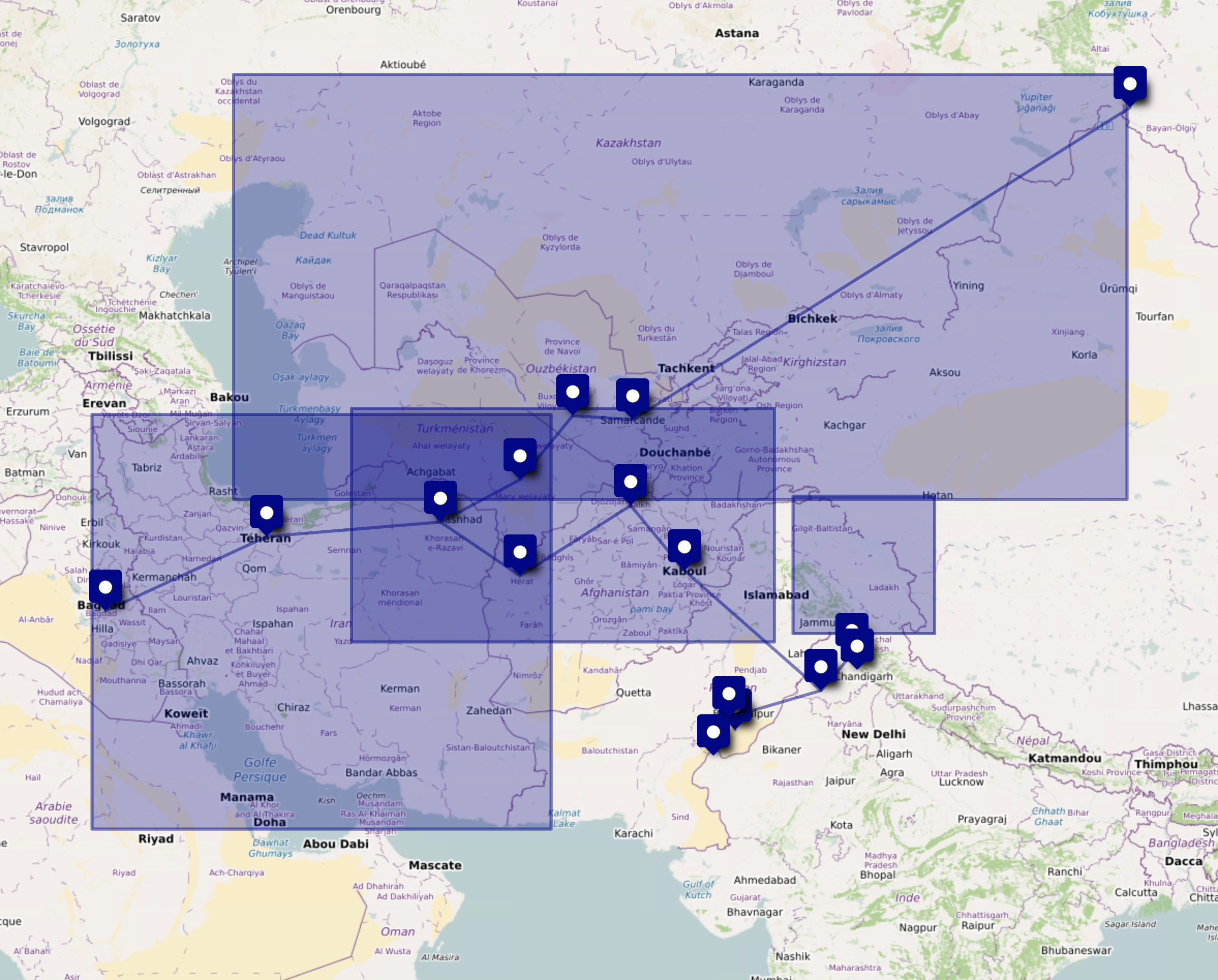
Migration Path — Interactive Map
Click the map below to open the live interactive version — pan, zoom, click pins for caption and date, switch basemap layer (street / satellite / terrain).
The Thesis
The Varaha Rajputs of Ambota trace their roots to the Altai steppe, kin to (but distinct from) the Xiongnu of Mongolia. From the Altai their lineage carried west across Central Asia as the Hephthalites and the House of Waraz, south across the Hindu Kush as the Alkhan, and into India as the Turk Shahi and Hindu Shahi dynasties — guardians of Bharat’s north-western frontier for more than three hundred years.
Mainstream historiography has effectively erased this clan. This site assembles the surviving evidence — Persian and Chinese chronicles, epigraphy, numismatics, the Schøyen Copper Scroll, and Y-DNA haplogroup Q1b (L275) — and lets the record speak for itself.
The Eight Eras
Each pillar page traces one chapter of the journey, with its rulers, inscriptions, and primary sources.
I · c. 1000 BCE – 4th c. CE
Origins — The Altai Steppe
The high pastures of the Altai mountains — kin to the Xiongnu of Mongolia, but a parallel cousin lineage. Slab-grave culture, the steppe horse, and the boar that became the family totem.
II · 3rd – 5th c. CE
Migration West
Across Bactria into Sassanian Persia. The House of Waraz becomes one of the Seven Great Houses; the boar (Verethragna) is its god of victory.
III · c. 430 – 600 CE
Hephthalites & Alkhans
Khingila, Toramana, Mihirakula. The Schøyen Copper Scroll. Bamiyan, Eran, the Gardez Ganesha. The empire across the Hindu Kush.
IV · 666 – 843 CE
Turk Shahi
Barha Tegin founds the Kabul-Zabul kingdom. Khorasan Tegin Shah and Phromo Kesaro hold the Hindu Kush against the Caliphate for nearly two centuries.
V · 843 – 1026 CE
Hindu Shahi
Kallar/Lalliya, Bhima, Jayapala, Anandapala, Trilocanapala — the dynasty that defended India for six generations against the Ghaznavids.
VI · 1026 — 1748 CE
Final Settlement
Two parallel survivals after 1026 CE: a Cholistan branch — Uchchha & Derawar — held by the Varhas through the 18th century (per Muhnot Nainsi's Khyat), and a Punjab branch — Bhatinda under Raja Banni Pal → Sirhind → the Shivalik hills, ending in the retreat of surviving Varahas to Ambota, district Una, Himachal Pradesh.
VII · Genealogy
Allied & Rival Clans
Bhatti, Chauhan, Gurjara-Pratihara, Jhala, Makwana, Tak, Janjua, Gil Jat — the families whose histories interlock with the Varaha story.
VIII · DNA
Genetic Evidence
Y-haplogroup Q1b (Q-L275), Mongolia North Neolithic admixture, and qpAdm modelling of the Xiongnu connection.
Rulers
- Touman — first recorded Xiongnu shanyu
- Kidara — Kidarite founder
- Khingila — Alkhan king of kings
- Toramana — Eran Boar
- Mihirakula — Procopius’s Gollas
- Peroz I — the Sassanian rival
- Yasodharman — Mandasor pillar
- Barha Tegin — Turk Shahi founder
- Khorasan Tegin Shah
- Lalliya / Kallar — Hindu Shahi founder
- Bhima Shahi
- Jayapala
- Anandapala
- Trilocanapala — last Hindu Shahi
Inscriptions & Artefacts
Allied & Rival Clans
Reference
- Full timeline (350 BCE – 1700 CE)
- Vanshavali — state revenue records
- Sources & bibliography
- About the project
The Varaha tribe preserved its cultural heritage, ultimately settling in Himachal Pradesh, where their maternal grandfather granted them five villages. This narrative illustrates the Varah’s adaptability and highlights their significant contributions to the region’s history.
— from the Conclusion, Varaha — Hunnic Migration to Hind
